Puppy Pads in a Small Flat: Odour and the Habit You Build
A pad in 40 square metres is not the same problem as a pad in a house. Placement, a tray, and a 24-hour change do most of the work. Plus the trade-off.
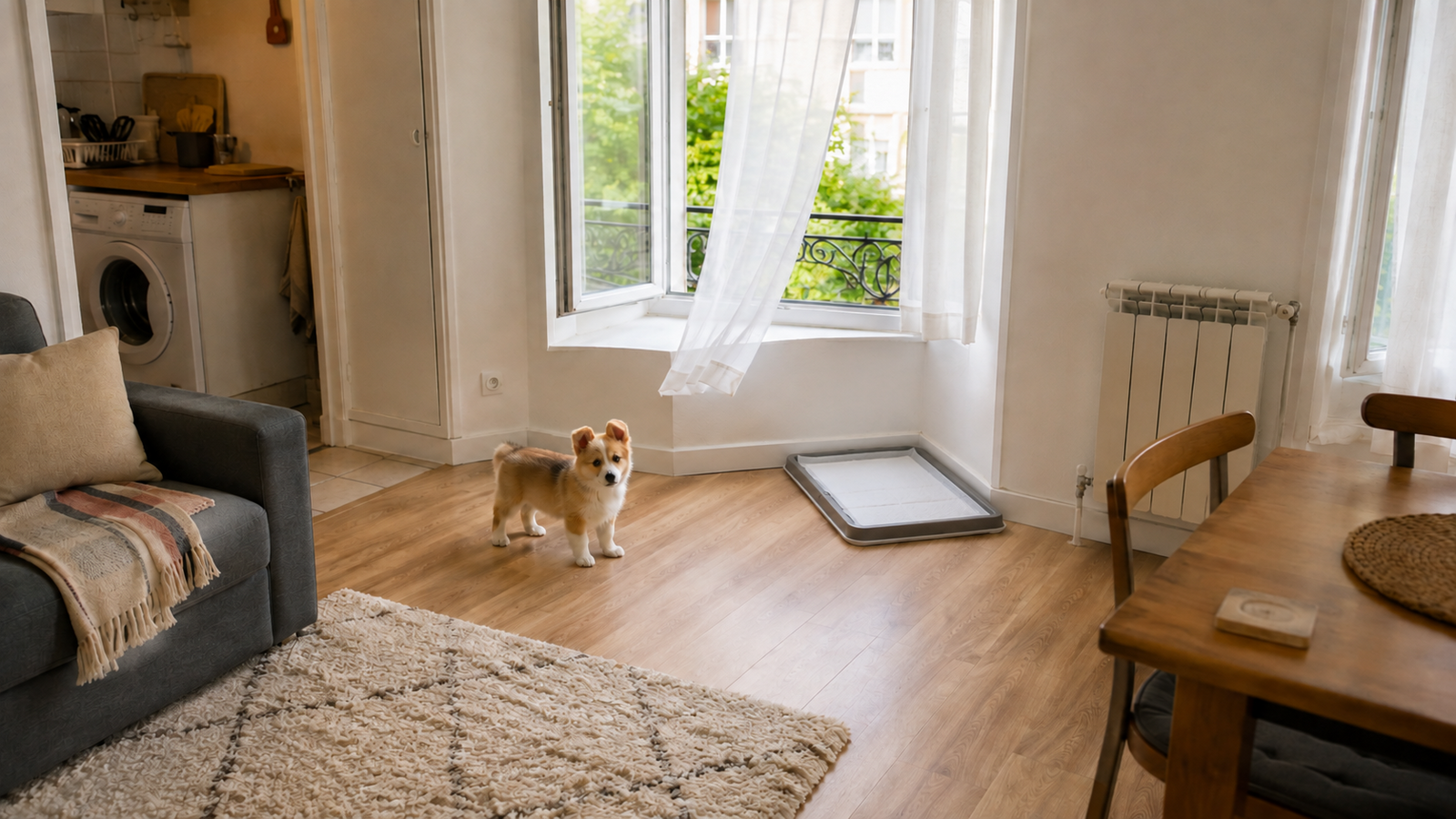
Three things do most of the work: put the pad somewhere with actual airflow rather than hidden in a closet, put a tray under it so nothing reaches your floor, and change it at least every 24 hours and immediately after a solid movement. The reason a pad feels worse in a flat than in a house is not your dog. It is air volume: fewer cubic metres, often one shared living and sleeping space, and frequently no cross-ventilation in the room where the pad ends up.
There is also a trade-off worth knowing before you settle into pads long-term, and it is covered honestly below.
Why a small flat is a different odour problem
The same pad, the same dog, and a completely different experience, for reasons that are physical rather than behavioural.
Less air to dilute into. A 40-square-metre flat has a fraction of the air volume of a house, so the same source produces a much higher concentration.
One space. In a house the pad can be two rooms away from where you eat and sleep. In a studio or a one-bedroom, it usually cannot.
Often no cross-ventilation. Many apartments have windows on one side only, so there is no through-draught to carry anything away.
Extraction is where the building put it, not where you need it. The bathroom fan is in the bathroom, which is frequently the least suitable place for a pad.
None of that is fixable by buying a better pad, which is what most of the advice on this topic assumes.
Where the pad can actually go
Reported guidance is direct: do not put pads in a small unventilated space such as a closet, where odour concentrates, and choose a corner with decent airflow.
In a one-bedroom that collides with the obvious wish to keep the pad out of sight, and it is worth naming that collision rather than pretending it does not exist. The out-of-sight options are usually the worst-ventilated ones.
A workable compromise in most flats: a corner of the room that has the window, away from soft furnishings, away from where you eat, and not directly beside a heat source, since warmth accelerates everything. If your only real option is a hallway with no window, expect to change more often rather than expecting the placement to carry it.
What is happening to your floor
The failure people discover months late.
Reported: with a pad placed directly on the floor, urine can travel under the edges and reach the floorboards beneath, creating a scent source that changing the pad does not touch. You clean diligently, and the smell persists, because the smell is no longer coming from the pad.
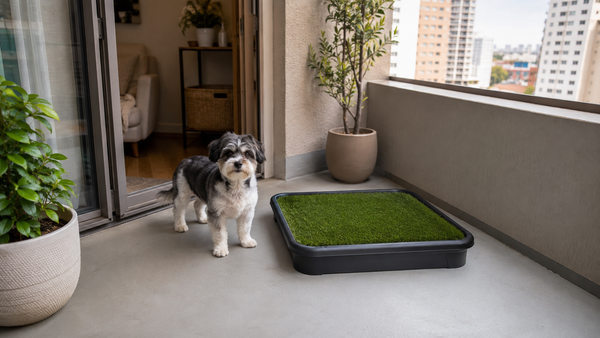
Use a tray. A pad tray or holder creates a physical barrier between the pad and the floor, keeps the edges down, and is the difference between a pad that is a consumable and a pad that is a slow leak.
In a rental this is also money. Odour and staining that has reached the floor is exactly the category of thing that appears in a move-out discussion, and what a landlord must show and by when is in moving out with a pet: the fees and clauses side of the bill. A tray costs a fraction of a deposit deduction.
The change and clean routine
Reported guidance, and it is simple enough to actually keep to:
- Change at least every 24 hours, and immediately after a solid movement.
- Clean spills with an enzyme-based cleaner formulated for pet stains, which targets the residue conventional cleaners leave behind. Choose one intended for use around animals.
- Wash the tray, not just the pad. It is the part that holds residue.
- Consider air movement in the room rather than fragrance. Masking scent on top of a source produces a worse result than removing the source.
The one habit that matters more than the products: change on a schedule rather than on a smell. By the time you notice, the concentration in a small flat is already well past where a visitor would notice.
The habit trade-off, and whose question it is
Worth stating plainly, and then handing off.
Reported across training-adjacent sources: prolonged pad use can build an indoor association, because dogs navigate largely by scent and a pad teaches that a particular smell marks an acceptable place to go. That can make a later transition to outdoors harder.
That is a real, documented trade-off and it is not a reason to panic if you are using pads for good reasons: a puppy too young for full outdoor routines, a dog with a medical need, a fourteenth-floor flat with an unreliable lift, or a work schedule that genuinely cannot deliver enough trips.
It is also not something this site is going to advise you on, because how to build or change that habit is training, and training belongs with a qualified trainer or a veterinarian. Who does what, and how to read the credentials, is in when the answer isn't a device: getting a trainer or a vet involved.
What this site can tell you is the logistical alternative: what a realistic outdoor routine costs in an apartment, in the potty routine when there's no yard and an elevator in the way, and what a balcony or tray system involves, in indoor potty systems and balcony grass pads. Those are the two things a pad is usually standing in for.
When the smell is not the pad
One caution that matters more than everything above.
If the odour changes character, if it becomes noticeably strong or unusual, or if your dog's pattern changes, that is a reason to speak to a veterinarian rather than to buy a stronger cleaner. Nothing here identifies a cause and nothing here is a diagnosis. A change is simply worth mentioning to someone who can examine the animal.
Similarly, a previously reliable adult dog that starts using pads again is not a pad question.
The neighbour dimension
Briefly, because it is the site's recurring theme and it applies here too.
Odour crossing into a shared corridor reaches the building the same way noise does, and it is treated the same way once it does: as a complaint about a resident with an animal. A pad near the front door in a flat with poor ventilation is the setup most likely to produce that.
Same principle as everywhere else on this site: the considerate version of a thing is also the version that keeps the building from writing rules about you. See talking to the neighbor before it becomes a complaint, and for the whole picture of an apartment dog's requirements, keeping a dog well in an apartment.
FAQ
Why do puppy pads smell so much worse in an apartment? Air volume. A small flat has far less air to dilute the same source, often has one shared living space, and frequently has no cross-ventilation. It is a property of the room rather than of the pad or the dog.
Where should I put a puppy pad in a small flat? Somewhere with genuine airflow, away from soft furnishings, food areas and heat sources. Avoid closets and small unventilated spaces, where odour concentrates, even though those are the tempting out-of-sight options.
How often should pads be changed? Reported guidance is at least every 24 hours, and immediately after a solid movement. Change on a schedule rather than waiting until you can smell it.
Do puppy pads ruin house training? Prolonged use is commonly reported to build an indoor association that can make a later transition outdoors harder. Whether and how that matters for your dog is a training question for a qualified trainer or a veterinarian.
Will a pad damage my rental floor? It can, if urine travels under the edges and reaches the floorboards, which is why a tray matters. Odour and staining that reaches the floor is the kind of thing that surfaces in a deposit discussion at move-out.